
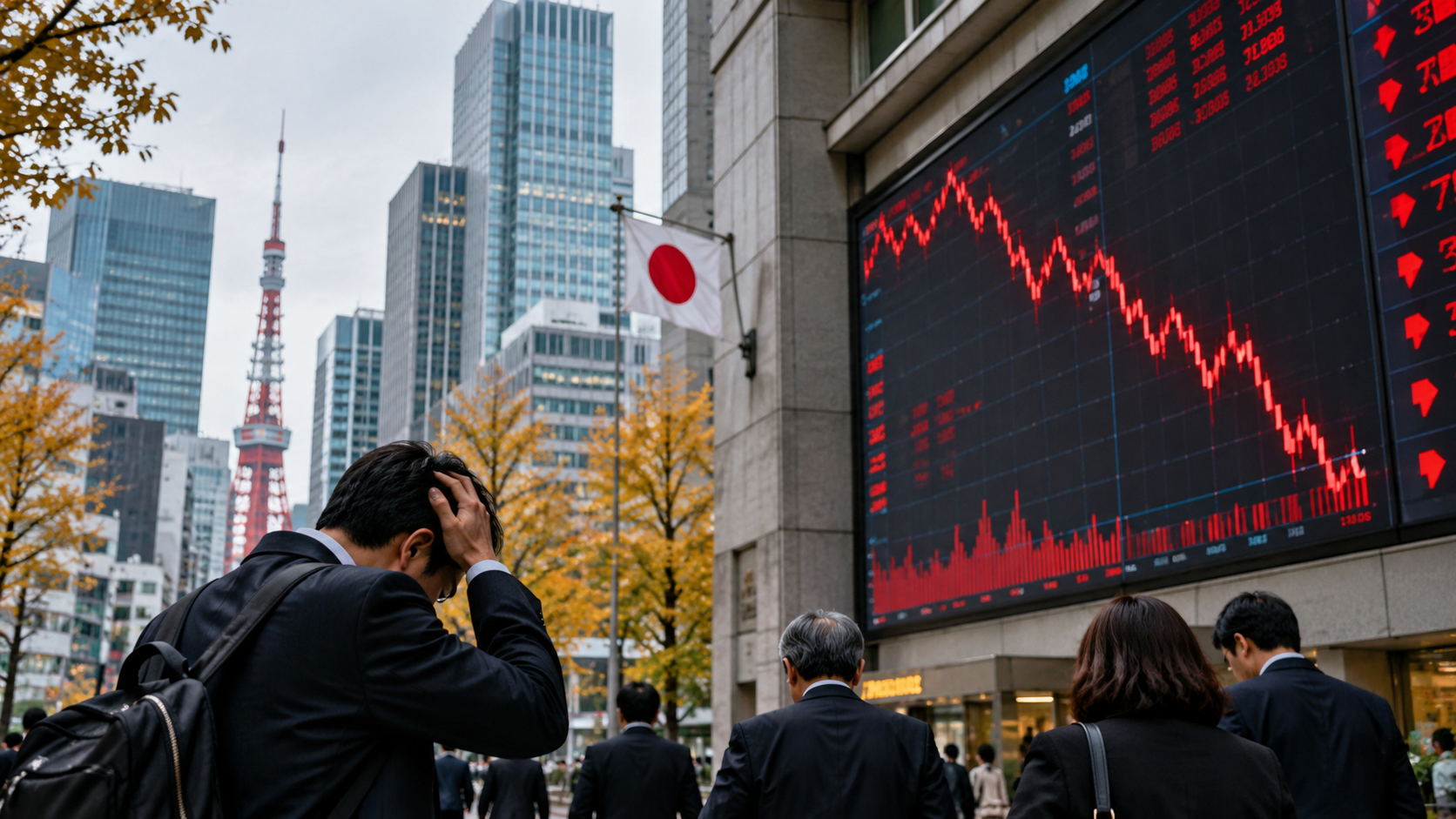
Japan’s stock market lost ground on Friday, 2 October 2026, bringing a two-session winning run to an end. Investors took profits following Thursday’s sharp 3.3% advance, while a steep decline in SoftBank Group shares and stronger-than-expected inflation in Tokyo added to the pressure. Despite the daily setback, the Nikkei 225 finished the week higher for the third consecutive time, extending its recent upward trend.
Where Did the Nikkei 225 Finish on 2 October 2026?
The Nikkei 225 ended Friday’s session at 68,309.46, a fall of 647.26 points, or 0.94%, from the previous close of 68,956.72. The index began trading at 68,313.46 and climbed to an intraday peak of 68,741.49 shortly after 9:20 am. It subsequently slipped to a low of 68,132.16 during the mid-morning session before remaining under pressure into the afternoon.
The decline did little to undermine the index’s broader weekly performance. The Nikkei recorded a 2.93% gain over the five trading days, marking its third consecutive weekly rise. Its closing level remained approximately 6.2% below the record high of 72,831.73 reached on 22 June 2026.
Nikkei 225 Market Statistics for 2 October 2026
| Market indicator | Reported figure |
|---|---|
| Closing price | 68,309.46 |
| Daily movement | -647.26 points (-0.94%) |
| Previous close, 1 October | 68,956.72 |
| Opening level | 68,313.46 |
| Highest level during trading | 68,741.49 |
| Lowest level during trading | 68,132.16 |
| Weekly performance | +2.93% |
| Record high, 22 June 2026 | 72,831.73 |
What Drove the Nikkei 225 Lower on Friday?
Profit-taking was a major factor behind Friday’s decline. The previous session had delivered a 3.30% advance, supported by renewed enthusiasm for semiconductor shares after strong results from Micron. That rally took the Nikkei to its highest closing level since 17 August, encouraging some investors to secure their gains rather than extend their positions.
Caution also increased ahead of the September US employment report, which was due after Japanese markets had closed. The prospect of fresh economic data from the United States encouraged some traders to wait before making further investments. Buying interest nevertheless appeared as the index moved closer to the 68,000 mark, helping to limit the decline.
Developments in the energy market added another source of uncertainty. Oil prices moved higher during Asian trading amid concerns that a possible escalation in tensions between the United States and Iran could threaten supplies from the Middle East. As Japan relies heavily on imported crude oil, a sustained increase in energy costs can put pressure on company profits, raise domestic expenses and worsen the country’s trade balance.
How Did Tokyo’s Inflation Figures Influence Japanese Shares?
Tokyo’s latest inflation figures added to concerns about the Bank of Japan’s next monetary policy decision. Core consumer prices, which exclude fresh food, increased by 2.7% year on year in September, exceeding the forecast of 2.4%. The reading was the strongest since November 2025 and marked a return above the central bank’s 2% inflation target after several months below that level.
Tokyo’s consumer price data are closely watched because they offer an early indication of broader inflation trends across Japan. The stronger-than-expected figures therefore strengthened the argument for further interest rate increases by the Bank of Japan. The yen steadied following the announcement as investors assessed the potential implications for monetary policy.
Higher interest rates can affect Japanese equities in different ways. Banks may benefit from improved lending margins, while exporters can face additional pressure if a stronger yen makes their products more expensive overseas. Growth-oriented companies may also come under pressure because higher borrowing costs and discount rates can reduce the present value investors place on their future earnings.
Which Nikkei 225 Shares Recorded the Biggest Moves?
SoftBank Group was among the weakest performers, with its shares dropping 5.83%. The decline followed the company’s announcement that it had completed the third and final $10 billion tranche of a previously agreed investment. Given SoftBank’s substantial weighting in the Nikkei 225, the fall made it one of the index’s largest negative contributors.
Other major companies also finished lower. Nissan Motor declined 4.57%, while medical equipment manufacturer Terumo lost 4.15%. Semiconductor equipment maker Tokyo Electron fell 3.82%. Fast Retailing shed approximately 1.5%, and Toyota Motor slipped by around 1.8%.
Advantest moved in the opposite direction, gaining 2.71% as demand linked to artificial intelligence continued to support sentiment towards chip-testing equipment. The banking sector delivered a mixed performance, with Sumitomo Mitsui Financial Group and Mizuho Financial Group easing, while Mitsubishi UFJ Financial Group edged higher during the session.
How Did the Wider Tokyo Stock Market Fare?
Selling pressure extended beyond the Nikkei 225, with the broader TOPIX market also facing weakness. SoftBank Group, Tokyo Electron and Fast Retailing were among the companies making the largest negative contributions to the Nikkei’s daily movement.
Trading activity was concentrated in several major Japanese companies. SoftBank Group, Toyo Engineering, Nissan Motor, Tokyo Electron, Rakuten Group, Orix and Tokio Marine were among the most actively traded stocks by value on the Tokyo Stock Exchange’s Prime Market.
Friday’s decline came after a strong recovery in the preceding sessions. The Nikkei had climbed to 66,753.72 on 30 September, its highest close since 19 August, before surging another 3.30% on Thursday. The latest pullback therefore followed a substantial advance rather than a prolonged period of weakness.
The fact that the index attracted some buying interest near 68,000 also suggested that investors were still prepared to consider opportunities when prices retreated. However, further gains would depend on the direction of corporate earnings, inflation, interest rate expectations and international market sentiment.
Which Technical Levels Should Investors Watch Next?
The 68,000 mark remains an important short-term level to monitor. Buyers emerged as the index approached this area on Friday, while the session low of 68,132.16 provided a nearby reference point for traders assessing immediate support.
On the upside, Friday’s intraday high of 68,741.49 represents the first level to watch, followed by the psychologically significant 69,000 threshold. A sustained move above 69,000 could strengthen the recovery and bring the June record of 72,831.73 back into focus. However, these levels are reference points rather than guarantees of future price movements.
Japanese government bond yields are another factor that could influence equity valuations. The 10-year government bond yield reached 3% in early September, its highest level since 1996, according to the figures supplied in the original market report. Any further increase could put additional pressure on share prices, particularly in sectors whose valuations depend heavily on expected future earnings.
Global Stock Markets: Key Developments
Markets across Asia recorded mixed results. Hong Kong’s Hang Seng Index dropped 2.6% to 23,972.29 in its first trading session following the National Day holiday. Mainland Chinese and Indian markets were closed during the session.
Attention later shifted to the United States, where September employment figures came in substantially below expectations. The economy added just 29,000 jobs, compared with a forecast of 84,000. Despite the weak employment reading, US equities advanced, with the S&P 500 rising 0.73% and the Nasdaq Composite gaining 1.19%. The Nasdaq also reached a record intraday high as Nvidia shares climbed to an all-time high.
European markets were firmer as well, with Germany’s DAX 40 rising 1.17%. These international movements offered a mixed backdrop for Japanese investors, with renewed enthusiasm for technology shares competing against concerns about slowing employment growth, inflation and future interest rate decisions.
Nikkei 225 Outlook: What Could Shape the Next Move?
Friday’s decline appears consistent with a period of consolidation following a strong week, rather than clear evidence that the broader upward trend has ended. The index still recorded a 2.93% weekly gain, while the recovery in US technology shares could help support sentiment towards Japanese semiconductor companies when Tokyo trading resumes.
The 68,000 area remains a key level to watch in the near term. If the Nikkei can hold above this region and regain 69,000, investors may begin looking towards the previous record high set in June. However, further progress is likely to depend on whether buying interest remains strong enough to absorb renewed selling pressure.
Two risks deserve particular attention. A fresh rise in oil prices could increase costs for Japanese businesses and consumers, while stronger inflation could encourage the Bank of Japan to raise interest rates more quickly than investors anticipate. Both developments could affect corporate earnings, currency movements and the attractiveness of Japanese equities.
For investors, the next move will depend on how these competing factors develop. The recent rally provides a positive backdrop, but inflation data, central bank policy and international market conditions remain important considerations.
Frequently Asked Questions About the Nikkei 225
What Was the Nikkei 225’s Closing Price on 2 October 2026?
The Nikkei 225 finished the session at 68,309.46, down 647.26 points, or 0.94%, from the previous day’s close of 68,956.72.
Why Did Japanese Stocks Decline on 2 October 2026?
Japanese shares fell as investors took profits following Thursday’s 3.3% rally. SoftBank Group dropped 5.83%, oil prices moved higher amid geopolitical concerns, and Tokyo’s core inflation rate exceeded market forecasts, increasing uncertainty about the Bank of Japan’s future interest rate decisions.
How Much Did the Nikkei 225 Gain During the Week?
Despite Friday’s decline, the Nikkei 225 rose by 2.93% over the week, recording its third consecutive weekly advance.